




Gold Star Pins
Gold star pins are official U.S. Department of Defense lapel pins worn by immediate family members of service members who have died in the line of duty. The pins feature a gold star on a purple background and serve as a symbol of pride in the service member's sacrifice. Eligible recipients include spouses, parents, children, siblings, and other close relatives.
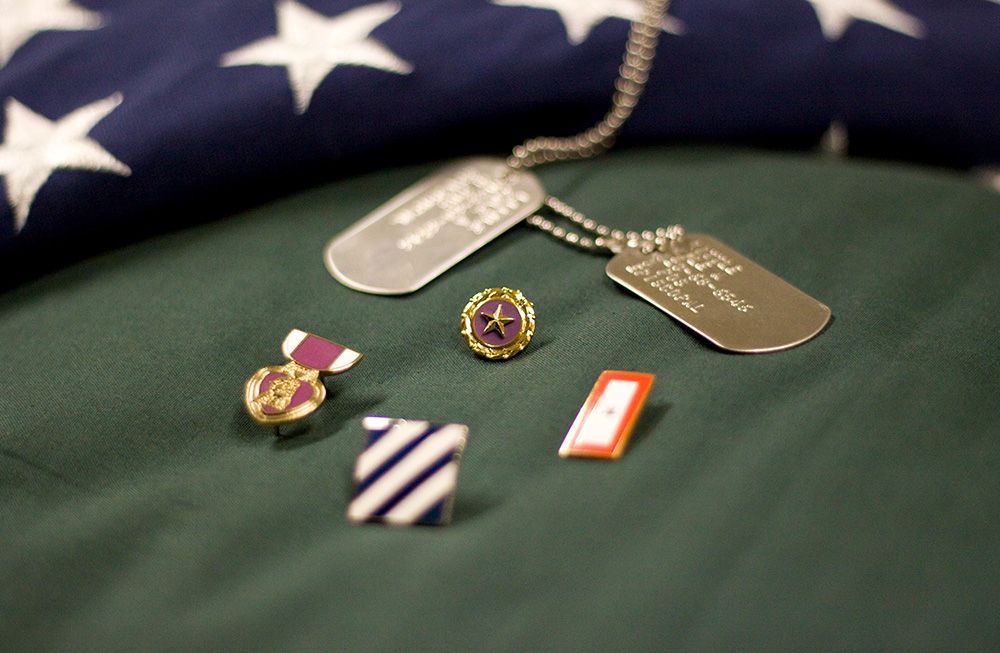
Gold Star Lapel Pin
Description: A gold star on a purple background, with a gold border and gold laurel leaves.
Eligibility: Awarded to immediate family members of service members who lost their lives in armed hostilities in which the United States was engaged, dating back to World War I.
Purpose: To signify the family's pride in their loved one's sacrifice, rather than just mourning the loss.
Next of Kin Lapel Pin
Description: Features a gold star within a circle of oak sprigs.
Eligibility: Awarded to immediate family members of service members who died while serving honorably in circumstances other than armed hostilities, such as those in a Reserve or National Guard unit in a drill status.
Authorization: This pin is authorized for issue retroactively to March 29, 1973.
Who is eligible
- Spouses
- Parents, stepparents, and adoptive parents
- Children and stepchildren
- Siblings and half-siblings
How to request
To request a pin, eligible family members can contact their local TAPS or military survivor support services. The request typically requires providing the names and relationships of the next of kin to the deceased.
Symbols of Honor: Blue Star and Gold Star Service Flags
The Blue Star Service Flag

Blue Star Service Flag: Patented by retired Army CPT Robert Queissner in 1917, the Service Flag, also known as a Blue Star Flag or Service Banner, represents a family member serving in the Armed Forces during a time of conflict.
The Gold Star Service Flag

The Gold Star Service Flag: Created in 1918 after President Woodrow Wilson approved a suggestion allowing mothers who lost a child serving in the war to wear a gold gilt star on the traditional black mourning arm band.
Service Flags were officially authorized by Congressional Act 36 U.S.C. 179-182 (1967), the Service Banners are usually displayed in a window of a home where an immediate Family member of a service member resides. Service flags may be displayed for the duration of the conflict.